It’s a common feeling among modern travelers: you arrive at a “historic” European village only to find that every house is a souvenir shop and the “locals” go home in the city at 5:00 PM. While much of Western Europe has carefully preserved its rural past by turning it into a (touristy) museum, Romania has done something much better:
We simply kept living in it.
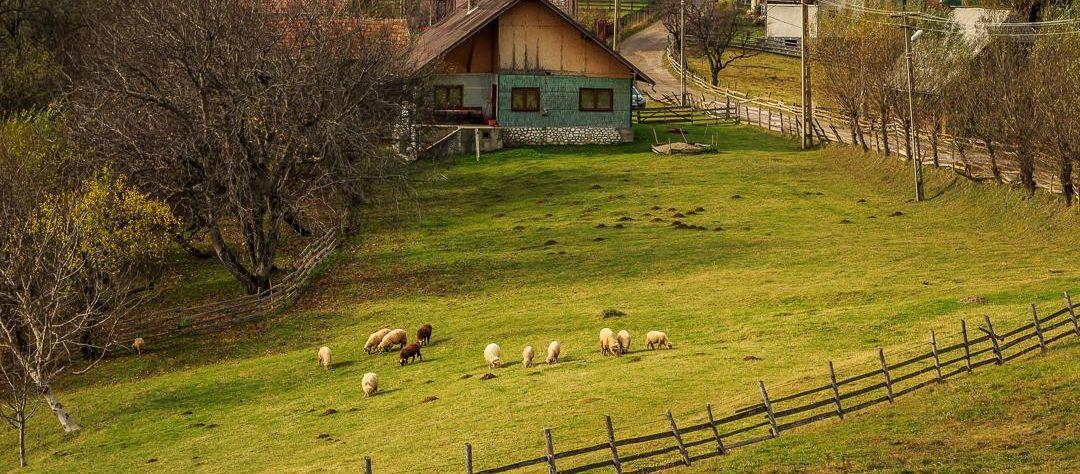
Across the Romanian countryside, from the heights of the Carpathian Mountains to the rolling hills of Transylvania, Maramureș and Bucovina, traditional village life is still part of everyday reality. These authentic Romanian villages are places where farming traditions, wooden houses, homegrown food and tight-knit communities continue as they have for generations.
This is one of the last places in Europe where rural life hasn’t been changed by modernity and technology. In many traditional villages in Romania, horse-drawn carts still pass along quiet roads, haystacks rise in summer fields, and the rhythm of daily life follows the seasons rather than the clock.
As locals, we’ve seen how surprised our guests are when they first step into a Romanian village. There’s often a moment of stunned silence, the realization that the simplicity many travelers dream about still exists somewhere in Europe. Rural Romania isn’t always polished or manicured, but that’s exactly what makes it so special and real. It is also where you will find some of the best prices in the country for accommodation and food.
So if you’re looking to go off the beaten path, discover Romanian folk culture, unique cultural heritage, and observe authentic countryside traditions, I prepared a list of 10 authentic Romanian villages where rural life is well preserved.
A docu-report worth thousands of words
1. Living Traditions: What Authentic Rural Life in Romania Really Looks Like
To understand rural Romania, you have to stop looking for postcard-perfect views and slow down so you can find - and experience - the way of life that sustains the village.
In many parts of Europe, “rural life” is like a weekend hobby. In many traditional villages in Romania, however, it is a centuries-old simple way of living in close relationship with the land, following the Orthodox calendar and community traditions.
It’s a place where the air smells of freshly cut grass in July and plum brandy (țuică) in October.
Where you hear cow bells ringing from somewhere over the hills.
Where at night, you don't see or hear anything.
- The calendar of the Earth
In the Romanian village, the clock is secondary to the season. Life is dictated by a circular rhythm: the spring plowing, the summer haymaking, the autumn harvest and the winter wood-chopping.
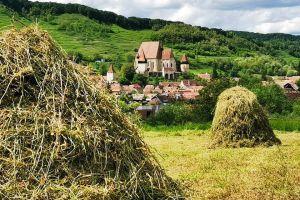
Haymaking is perhaps the most iconic symbol of traditional life in rural Romania. If you visit in June or July, you won't hear the roar of industrial mowers. Instead, you’ll hear the rhythmic swish-swish of manual scythes cutting through mountain grasslands.
This still happens because the steep hills in regions like Maramureș, Apuseni Mountains and parts of Transylvania are often inaccessible to tractors. The resulting haystacks, those tall, shaggy “conical towers” dotting the landscape, become essential winter fuel for the livestock that sustain village households.
- The Sunday social fabric
The social structure of a Romanian village is anchored by two things: the Sunday service and the village gate.
On Sundays, the village transforms. You’ll see generations of families walking to the local church, often dressed in traditional embroidered shirts that have been passed down for decades. Romanian churches were essential to keeping Romanian identity alive throughout centuries of foreign domination.
But the real community "newsroom" is the laviță, the wooden bench outside every household's front gate. This is where elders sit to watch the world go by, exchange news, and keep an eye on the neighborhood.
As a visitor, a simple Bună ziua (Good day) is your golden ticket to a conversation - and a sign of respect.
- Food as a way of life
In the city, farm-to-table food is a premium dining concept. In the Romanian village, it’s just called “Tuesday.”
That's why if you want to taste authentic Romanian food you must go in a village.
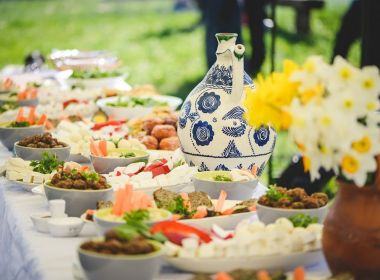
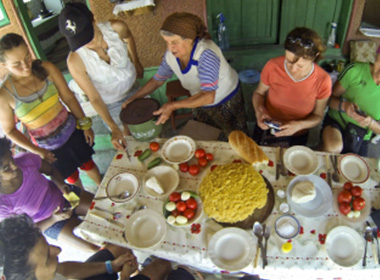
Most households in rural Romania are still self-sufficient. The milk comes from the neighbour’s cow, the eggs from the yard, and the vegetables from the garden behind the house. And because life follows the seasons, the zacuscă (vegetable spread) and pickled vegetables you see in jars are survival tools for the winter, made with a level of care that no factory can replicate.
- Living crafts and traditions
When you see an intricately carved wooden gate in Maramureș or a hand-woven rug in a guest room, remember: these weren't originally made as decorations.
They are representative of everyday life in traditional Romanian villages. When we explain to tourists the hidden meanings and symbols, most are in awe.
- Woodwork: Gates were built to protect the household and symbolize the status and beliefs of the family through carved solar symbols.
- Weaving & embroidery: Women spend winter nights weaving because every home needs blankets and every family member needs clothes.
- Egg painting: In Bukovina, the delicate art of "writing" on eggs using wax is a spiritual practice tied to Easter, a skill handed down through maternal lines for generations.
These everyday traditions are what make exploring authentic Romanian villages so rewarding for travelers interested in culture, history, and slow travel.
Local insight: You might notice things aren't always "perfect": a fence might be crooked, or a road might be dusty. Embrace it. That "imperfection" is the mark of a place that is being used, lived in, and loved, rather than just curated for tourists.
Across the country, from the wooden villages of Maramureș to the Saxon settlements of Transylvania, many communities still preserve this way of life. For travelers looking to experience this cultural depth firsthand, a few villages stand out as truly exceptional places to visit:
2. Authentic Romanian Villages That Preserve Rural Traditions
Here are some of the most authentic Romanian villages where the pace of life is still set by the seasons, the soil, and the sound of church bells.
- Viscri (Transylvania): The Saxon Time Capsule
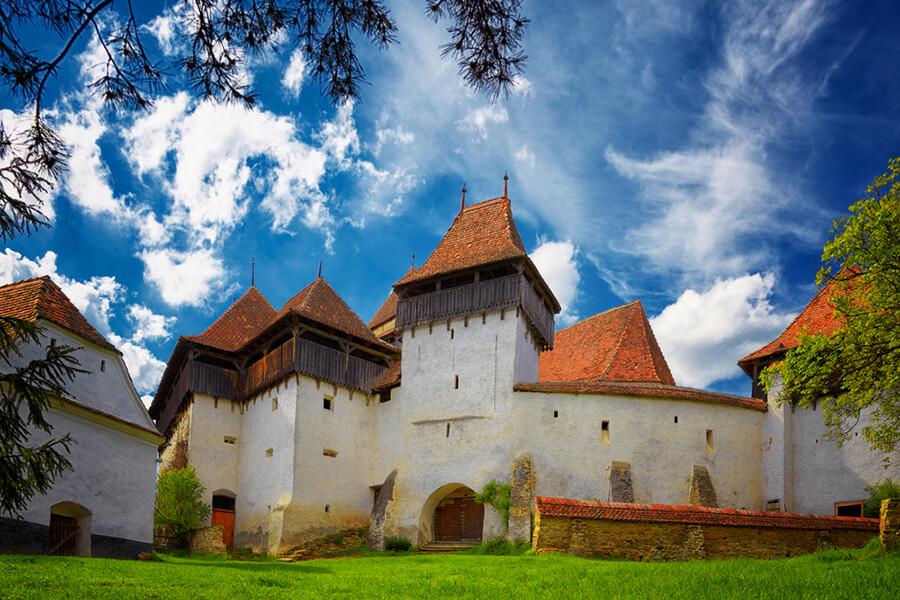
Viscri is a masterclass in preservation and sustainable tourism, and probably one of the most famous Saxon villages in the Romanian countryside, thanks in part to King Charles III's long-standing admiration for the area and the holiday home he owns here.
- Unique heritage: A UNESCO World Heritage site known for its stunning Saxon fortified church and rows of pastel-colored houses.
- The experience: Walk around the peaceful streets, feel the atmosphere, and admire the preserved architecture. You can visit the local blacksmith or buy hand-knitted woolen socks from the village women’s guild.
- Best time to visit: anytime of the year.
- Region: Brașov County.
Looking to explore the heart of Transylvania?
- Breb (Maramureș): The land of wood
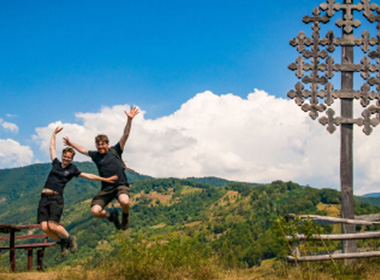
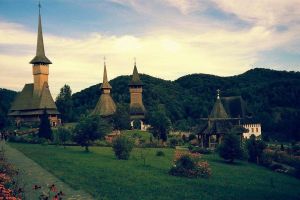
In the north, Breb feels like a different planet. It’s the epicenter of Maramureș rural traditions, where all things wood feel like a life philosophy.
- Unique heritage: Massive, hand-carved wooden gates and houses built without a single metal nail.
- The experience: Waking up to the sound of a scythe. Breb is one of the best places to see subsistence farming in Romania in its purest form.
- Best time to visit: Easter or Christmas for the full folk costume experience. April - October otherwise.
- Region: Maramureș.
2 or 3 Days in Maramures: Wooden Churches, Traditions & Village Life
Start from: Cluj-Napoca
- Ciocănești (Bucovina): The painted village
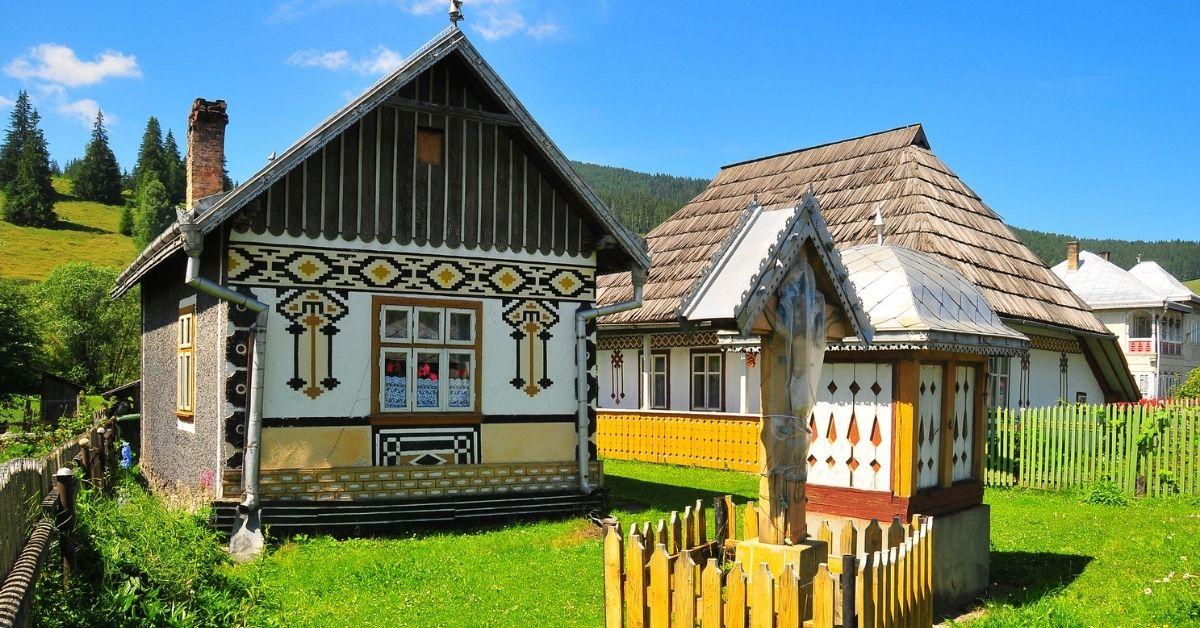
In Bucovina, the art isn't just inside the houses; it’s on the walls.
- Unique heritage: A local law requires every house to be decorated with traditional folk motifs, mirroring the patterns found on Bucovina rural traditions like painted eggs.
- The experience: Visiting the National Museum of Painted Eggs and seeing how the geometric "lost" patterns of the region are kept alive.
- Best time to visit: During the National Festival of Painted Eggs (usually around Easter).
- Region: Suceava (Bucovina).
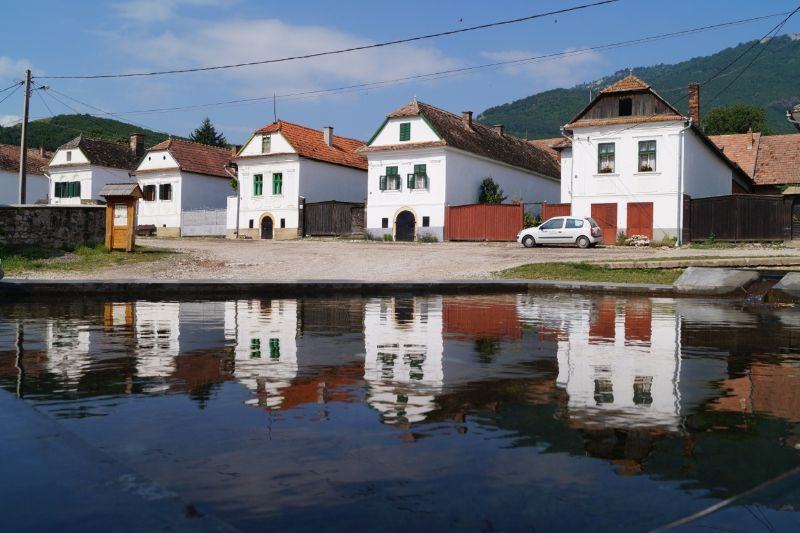
- Rimetea (Alba): The village where the sun rises twice
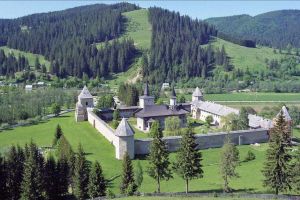
Tucked under the massive "Szekler’s Rock," this village is the crown jewel of Hungarian-Romanian heritage.
- Unique heritage: Unique traditional architecture, with uniform white houses and green shutters, representing the 19th-century iron-mining wealth of the region. It won the Europa Nostra award for preservation.
- The experience: Hiking up the mountain for a panoramic view of the perfectly aligned village and the surrounding countryside.
- Best time to visit: Late spring or early autumn for hiking.
- Region: Transylvania (near Cluj).
If you want to go hiking in Transylvania, then reaching the top of this mountain will be a challenging - but memorable - experience!
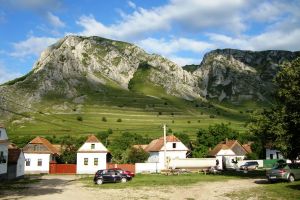
- Letea (Danube Delta): Sand and blue houses
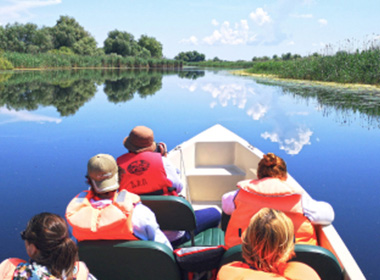
Letea is a "water village" reachable only by boat, sitting on the edge of Europe’s oldest natural reservation.
- Unique heritage: Traditional Lipovan (ethnic Russian) architecture, with bright blue wooden trim and reed-thatched roofs.
- The experience: Taking a boat trip to see the wild horses of Letea and the nearby sand dunes. It’s the most exotic version of the Romanian village life.
- Best time to visit: May to June (birdwatching peak).
- Region: Danube Delta.
To truly experience a place as unique as Letea, you’ll want a tour that does it justice; and as you might imagine, we have just the one.
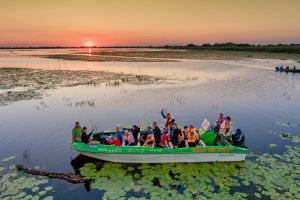
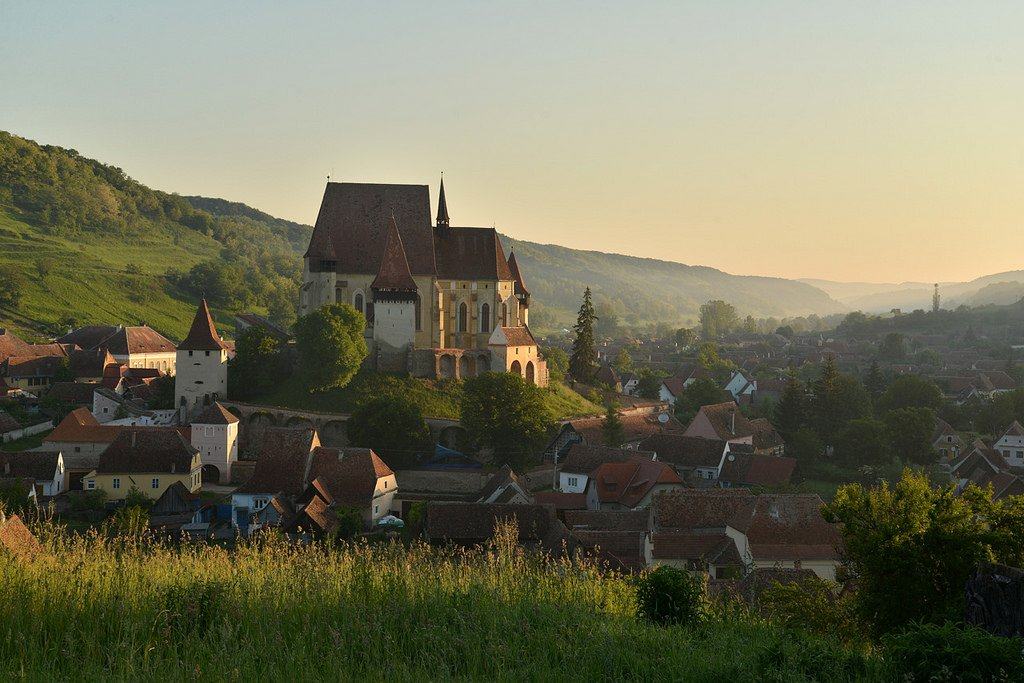
- Biertan (Transylvania): The marriage prison
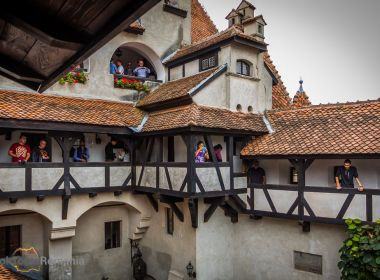
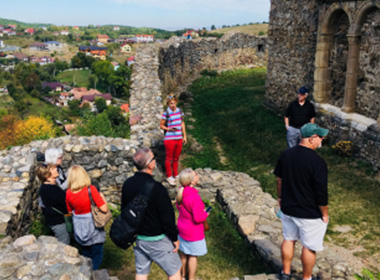
Biertan sits in a valley dominated by one of the largest and most impressive fortified churches in Romania.
- Unique heritage: Famous for its "matrimonial prison", a tiny room where couples wanting a divorce were locked for two weeks with only one bed, one plate, and one spoon. (It worked; they only had one divorce in 300 years!)
- The experience: Exploring the multi-leveled fortifications and the medieval atmosphere of the central square.
- Best time to visit: Summer, during the "Full Moon" horror & fantasy film festival.
- Region: Sibiu County.
Biertan is also a convenient place to pick up the trail of the famous Via Transilvanica.
Our Transylvania day trip includes a visit to Biertan, where we'll guide you through all the village's hidden gems.
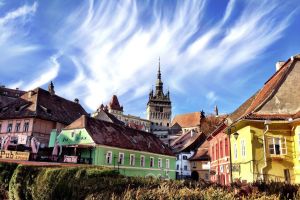
Tour of Transylvania's Countryside: Sighisoara Citadel & Fortified Villages
Start from: Cluj-Napoca
- Măgura (Piatra Craiului): Life above the clouds
If you want to understand shepherd culture in Romania, you go to Măgura.
- Unique heritage: High-altitude mountain architecture where houses are scattered across ridges rather than clustered together.
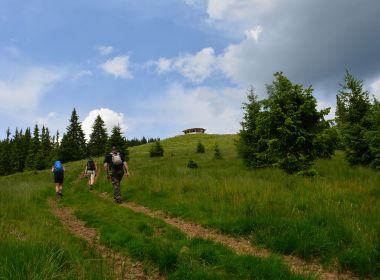
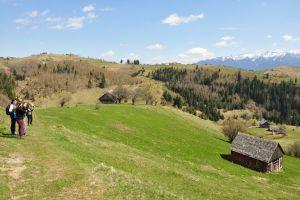
- The experience: Breathtaking views of the Piatra Craiului and Bucegi mountains. You’ll likely share the road with horse-drawn carts and flocks of sheep.
- Best time to visit: June (for wildflowers) or October (for autumn colors).
- Region: Near Bran/Brașov.
If Măgura sounds like your kind of escape, join us for a day trip to this authentic mountain village.
- Charlottenburg (Banat): The perfect circle
Built by German colonists in the 18th century, this is the only circular village in Romania.
- Unique heritage: A perfectly symmetrical layout designed to keep the forest (and predators) at bay while protecting the inner gardens.
- The experience: Best seen from a drone or a nearby hill to appreciate the geometry. It’s a quiet, eccentric spot that feels frozen in the Swabian era.
- Best time to visit: Spring.
- Region: Banat (near Timișoara).
Charlottenburg is something special. If you're ready to explore this one-of-a-kind circular village, get in touch and we’ll handle the rest.
- Marginea (Bucovina): The black pottery masters
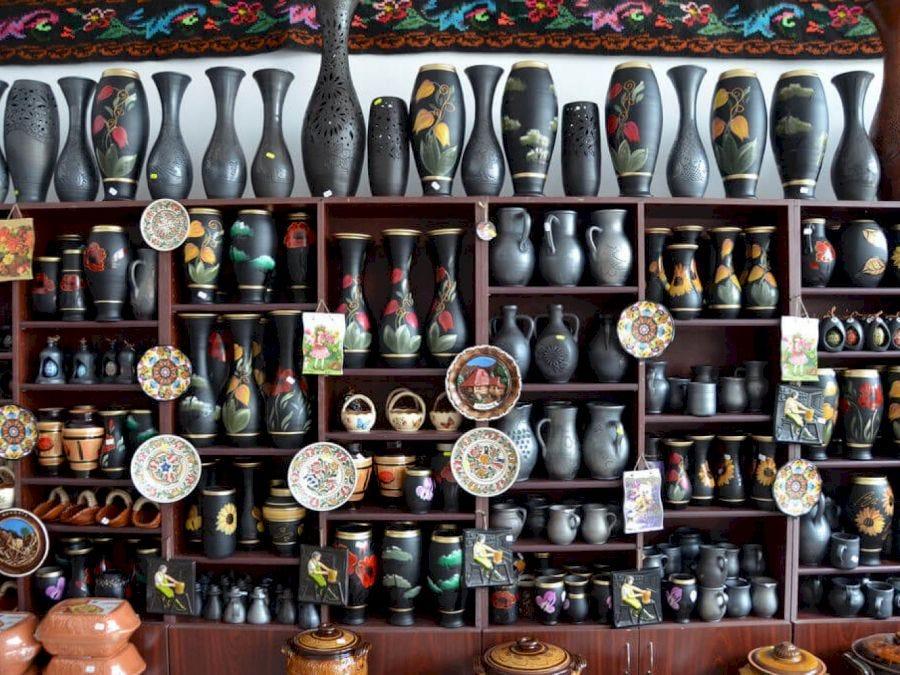
Marginea is world-renowned for a craft that dates back to Geto-Dacian times.
- Unique heritage: The production of black ceramics, achieved through a specific oxygen-deprived firing technique in ancient-style kilns.
- The experience: Watching a master potter turn a lump of grey clay into a metallic-black work of art.
- Best time to visit: Year-round.
- Region: Suceava.
Step into the workshop where history is shaped by hand. Join our Bucovina tour to witness the ancient art of Marginea Black Pottery, and perhaps even try the wheel yourself.
- Ineleț (Cerna Mountains): The ultimate isolation
For those who think Viscri is too "touristy," there is Ineleț.
- Unique heritage: There are no roads here. To reach this community of about 30 people, you must climb four vertical wooden ladders attached to a limestone cliff.
- The experience: Total disconnection. No cars, no noise, just a community living entirely off the land as they have for centuries. It is arguably the most authentic Romanian village left.
- Best time to visit: Strictly summer (the ladders are dangerous when wet or icy).
- Region: Caraș-Severin.
Since it’s so remote and requires specialized local knowledge, we don’t offer Ineleț as a standard group tour. However, if you’re ready for the climb and want to see a world completely untouched by engines, we’d love to help you get there.
3. How to Visit Romanian Villages Respectfully
Visiting a Romanian village isn't like visiting a museum or a theme park. There are no turnstiles, and the "performers" are actually just neighbors going about their Tuesday. To have the best experience, and to ensure these communities welcome the next traveler, it helps to keep a few things in mind.
- These are homes, not sets
In places like Viscri or Breb, it’s easy to feel like you’ve stepped onto a movie set. But the person leaning over that beautiful wooden gate isn't an extra; they are the owner of that house.
These are peaceful communities. Keeping noise levels down, especially near churches or during Sunday service, shows you value their way of life.
Most villagers are incredibly friendly, but don't speak any English! So learning some basic, easy Romanian phrases such as Pot să fac o poză? (can I take a photo) will go a long way!
- Support the "village economy"
The best way to preserve these traditions is to make them economically viable for the people living them.
So, instead of bringing a packed lunch from the city, eat at a Punct Gastronomic Local. These are certified private kitchens where locals serve traditional meals made with ingredients from their own garden. It’s the most authentic meal you’ll ever have.
If you see a lady selling hand-knitted socks or a jar of forest honey on her porch, buy it there. Your money goes directly into the hands that made the product.
- Why a local guide changes everything
We’ll be honest: rural Romania isn't always "user-friendly" for solo travelers.
- The language barrier: Outside of the younger generation in cities, English is rarely spoken in the villages. A guide acts as your translator, turning a polite nod into a two-hour conversation about how to bake bread.
- The "hidden" gems: The best weaver in the village doesn't have a Google Maps pin. Our guides know whose door to knock on and which forest path leads to the best view of the haystacks.
- Navigating the unspoken: From knowing when it’s appropriate to enter a yard to understanding the complex history of a fortified church, a local friend makes sure you actually understand the village.
You may want to check our Romania itineraries to see how you can include some of these villages in your trip.
4. Why Rural Romania Still Matters
At the end of the day, a journey through the Romanian countryside isn’t about checking off a list of monuments or snapping the same photo as everyone else. It’s an encounter with living heritage. A rare, flickering chance to see a version of Europe that has largely vanished everywhere else.
These places matter because they remind us that simplicity is a choice to value quality, community, and the land beneath our feet.
But we have to be honest: this world won’t stay unchanged forever. As the modern world inches closer and the younger generations move toward the cities, the balance of these authentic Romanian villages becomes more delicate. It would be a travel mistake not to visit them now.
The time to sit on a laviță and hear these stories is now.
If you’d like to explore these villages with someone who actually knows the families, the secret forest paths, and the true heart of our traditions, send us a message and we'll create a custom itinerary that will make your trip memorable.
Your Romanian Friend,
Georgiana